×
![Modal Image]()

An embedded team, a September festival deadline, and 2 feature sets built to last.
Amplified joined Kaizen at a point when the product was moving quickly and important features were still taking shape. With a major client launch approaching, limited documentation, and designs continuing to evolve, the team needed additional engineering capacity that could integrate quickly, adapt to changing requirements, and keep delivery moving forward.
That’s where this case study starts. Kaizen Labs builds technology that helps municipalities improve how residents interact with local public services. Its Local Recreation platform gives cities and civic institutions a simpler way to run park bookings, memberships, event ticketing, permits, facilities, activities, and recreational programs, with the goal of making government tools feel as intuitive as the consumer apps people already use.
To support that growth, Kaizen brought in Amplified Software to work alongside its team on two major feature sets: a comprehensive ticketing system and a flexible membership platform. At Amplified, we call this the plug-in model: joining an existing team, adapting to its way of working, and contributing where extra engineering capacity is needed most.
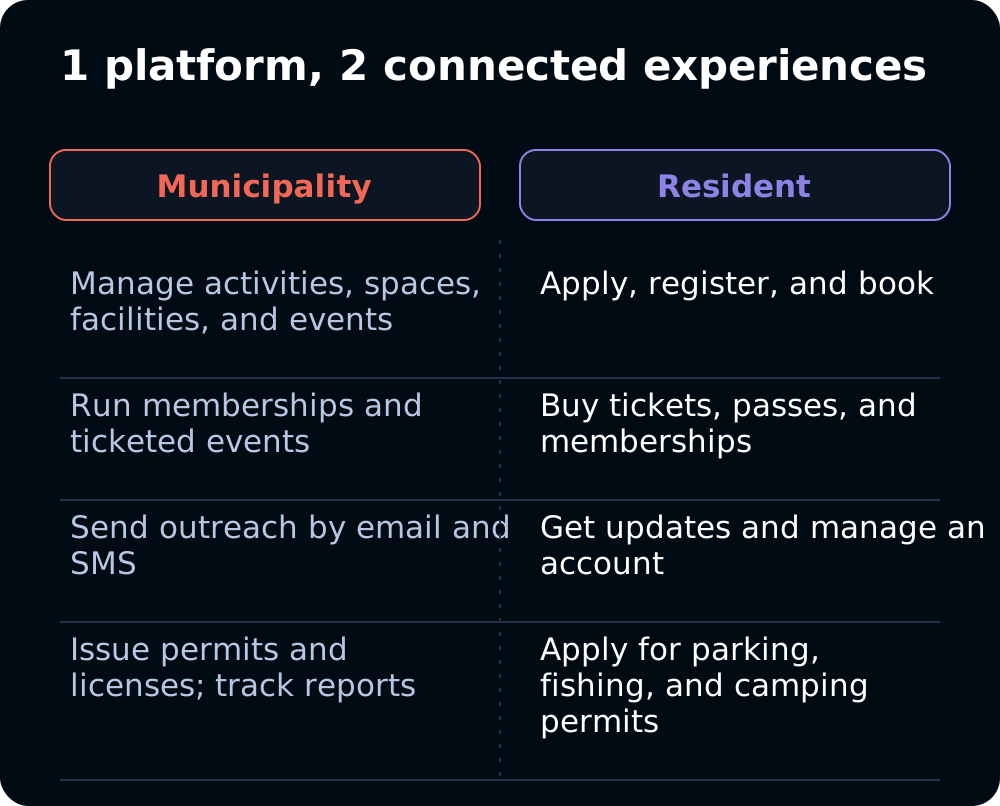
The platform has 2 sides. Municipalities manage activities, spaces, facilities, events, memberships, outreach, and resident-facing services. Residents apply, register, book, or buy access to those services: reserving a public space, keeping a membership current, getting updates by email and SMS, or applying for permits and licenses. The aim on both sides is simple: reduce the friction between residents and the services they need.
Supporting that range of use cases meant building features that could work across different municipalities, organizations, and operating models. That became especially important as Amplified began working on ticketing and memberships, 2 areas that needed to be flexible enough to support very different types of public and recreational services.
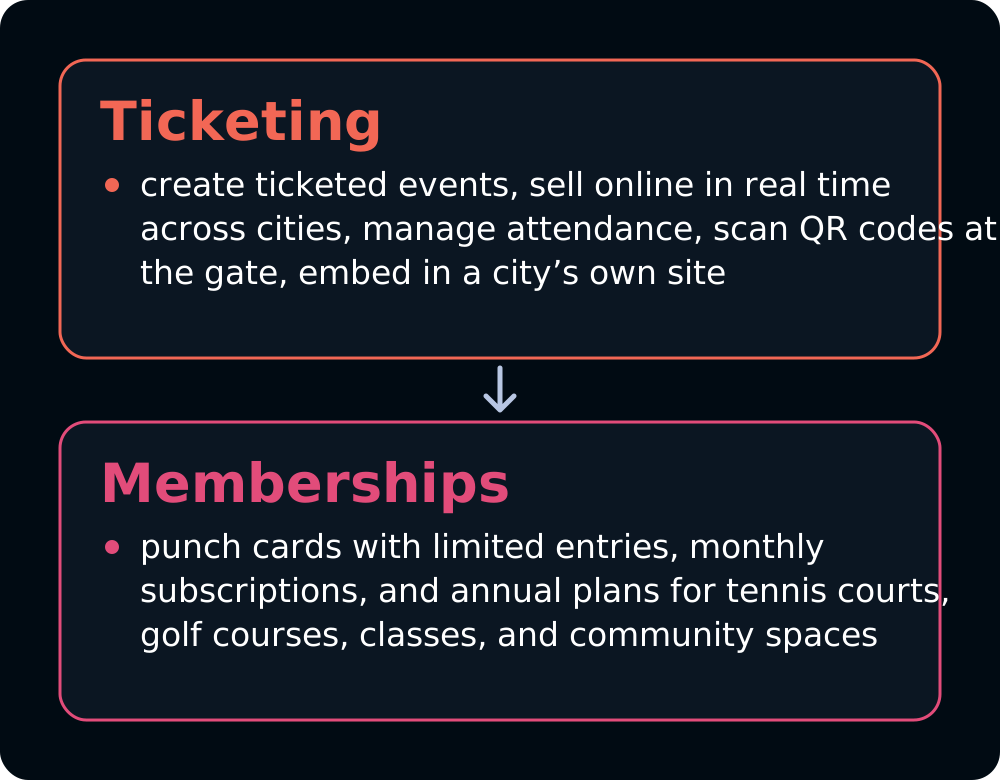
Ticketing had to support high-volume, real-time sales across multiple cities: municipalities and event organizers creating ticketed events, selling online, managing attendance, and admitting people by QR code at the door.
Memberships had to support different pricing models, punch cards, monthly subscriptions, and annual plans, so that civic organizations and recreation operators could manage recurring access to tennis courts, golf courses, public classes, and community spaces.
What made it harder was Kaizen’s pace. Client demos and launch deadlines came before internal roadmaps, which meant implementation often started before designs were final. We had to work in a fast, design-light environment and still leave behind code that would hold up for years.
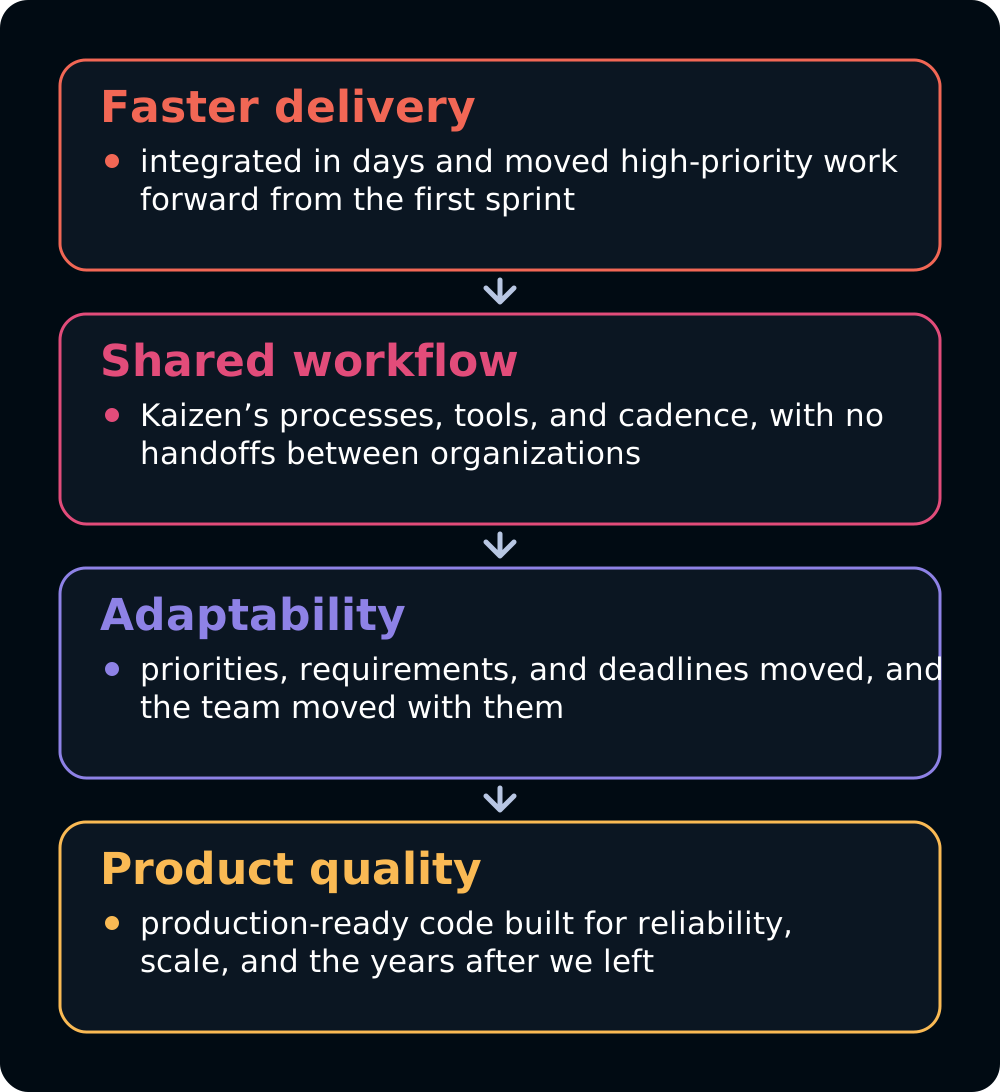
We joined as a plug-in development team: same tech stack, same tools, same channels, same stand-ups as Kaizen’s own engineers. That’s how a small team contributes quickly without slowing anyone else down, and it’s how we’ve worked with most of the startups we’ve partnered with.
Kaizen’s CEO was closely involved in the development process, which meant priorities could evolve quickly. Amplified worked closely with the team to stay aligned, adapt to changing requirements, and keep delivery moving without compromising quality.
One of our engineers described the experience as learning to adapt to Kaizen’s pace while maintaining the quality standards needed for long-term product development.
The habit that mattered most was starting before the mockups arrived. Designs kept changing while implementation was under way. Priorities shifted with client needs and upcoming demos. We built what was clear, kept the parts that weren’t clear easy to change, and shipped production-quality code on the dates Kaizen had promised its clients.
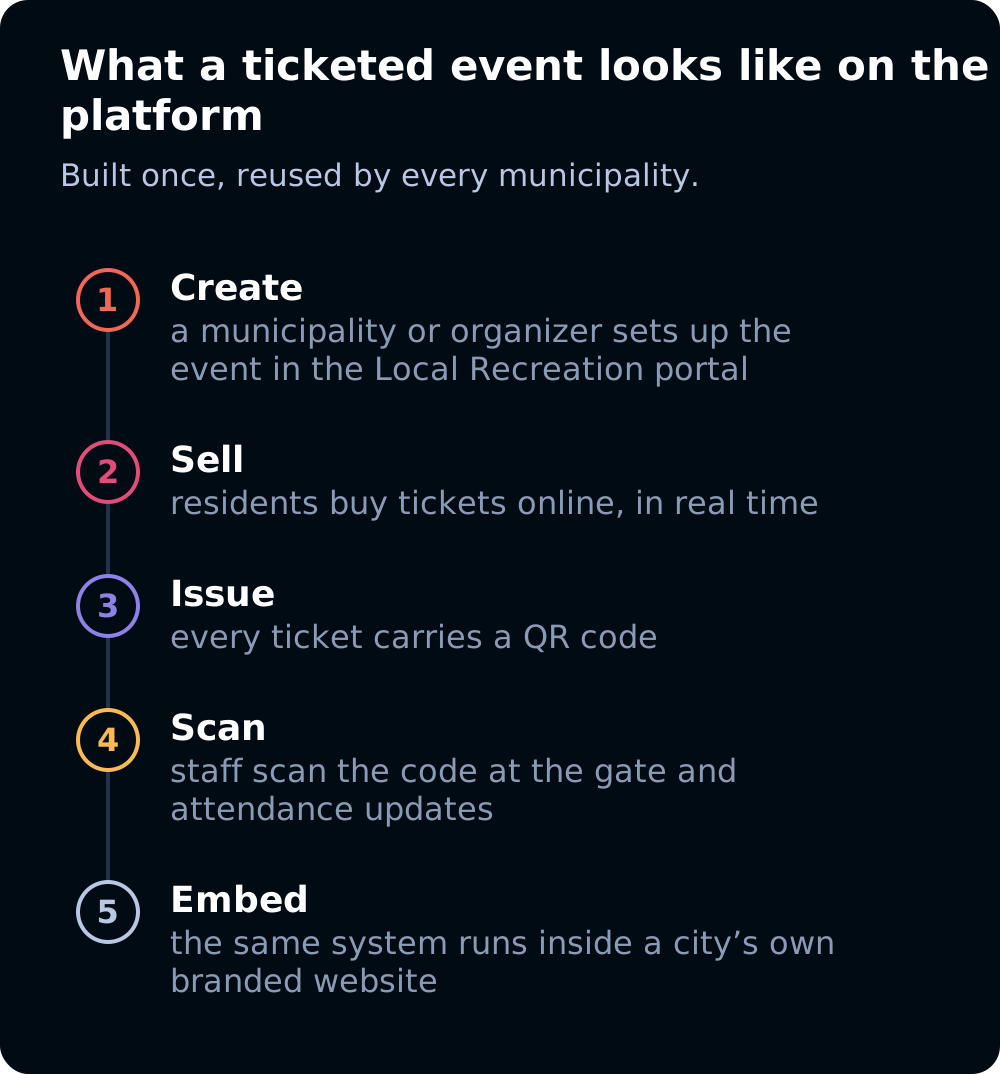
The ticketing system was the first milestone. We helped build a reusable, platform-wide solution that let municipalities and event organizers create and manage ticketed events directly in the portal. Residents could buy tickets online, receive QR codes, and use them for entry. The ticketing experience could also be embedded into a city’s branded website, keeping the process simple and familiar for residents.
The ticketing system was fully deployed in time for a major client launch.
After ticketing came memberships. We helped develop a flexible framework for selling recurring access to facilities, programs, and public spaces, with standard memberships alongside punch cards with a limited number of entries. Municipalities, clubs, and recreation operators gained more flexibility in how they managed access and recurring engagement.
The membership framework also needed to work across different types of facilities and programs. A tennis court, a golf course, and a public class can all operate differently, so the system had to remain flexible enough to support a range of use cases.
Amplified helped deliver two of the most important feature sets on the Local Recreation platform. Ticketing allowed municipalities and organizers to manage events, online sales, and QR entry from one place. Memberships introduced flexible access models, including subscriptions and punch cards, that recreation operators could use to manage recurring engagement.
Together, these features expanded what organizations could offer through the platform. Rather than relying on separate systems for registrations, memberships, and ticketed events, municipalities could manage key resident interactions through a more unified experience. The features became an important part of Kaizen’s product offering and supported customer rollouts during a period of rapid growth.
The collaboration also added engineering capacity at an important stage of Kaizen’s growth. Our involvement helped keep key initiatives moving while Kaizen expanded its in-house engineering team, without disrupting the workflows already in place. The integration was close enough that some people at Kaizen assumed Amplified engineers were part of the internal team.
What we took forward
Our work with Kaizen took place during an important stage of the company’s growth, helping expand the Local Recreation platform as the product and customer base continued to evolve.
Kaizen has kept growing since. It announced a $21 million round from NEA in October 2025, with recreation districts, county park systems, and a state park system among its named customers, and in August 2026 it announced a $15 million Department of War contract to build and operate the c-UAS Marketplace.
For us, the lesson is about the model. Embedding directly into a fast-moving team, adopting its workflow instead of imposing ours, and adapting to a design-light environment let us deliver the features Kaizen needed on the dates it needed them, without giving up the quality standard we hold ourselves to. Close collaboration was the mechanism: 2 teams moving as 1 make decisions faster and spend their time on residents’ problems instead of on managing a vendor.
At Amplified, the principle we took from Kaizen still guides most of our partnerships: successful delivery is about building the flexibility, alignment, and engineering capacity a product needs to keep evolving, as much as it’s about the features themselves. If you have a launch date and not enough hands, that’s a conversation we’ve had before. Let's build together.