×
![Modal Image]()

How Tales of Illusion turned 5 decaying photographic negatives into worlds you can stand in.
In one of the earliest conversations , Juliana Hoyos asked the engineering team a question that decided most of what followed: when you move an artwork into an immersive medium, what should stay exactly as it is?
It’s the opposite of the question a technology team usually hears. Immersive projects tend to run on more: more interaction, more effects, more movement, more spectacle. Juliana’s photographs work on ambiguity, on the space between appearing and disappearing, and the risk she named in that conversation was that the technology would start competing with the work. Everything we built afterward was tested against it.
Tales of Illusion is an Apple Vision Pro experience made by Juliana, a Barcelona-based artist, together with Amplified. What began as a body of photographic research became a series of inhabitable perceptual environments: places that explore how immersive technology can support reflection, ambiguity, and sensory awareness rather than spectacle. At Amplified we think of it as an artistic investigation that happened to need a headset, rather than a demonstration of one.
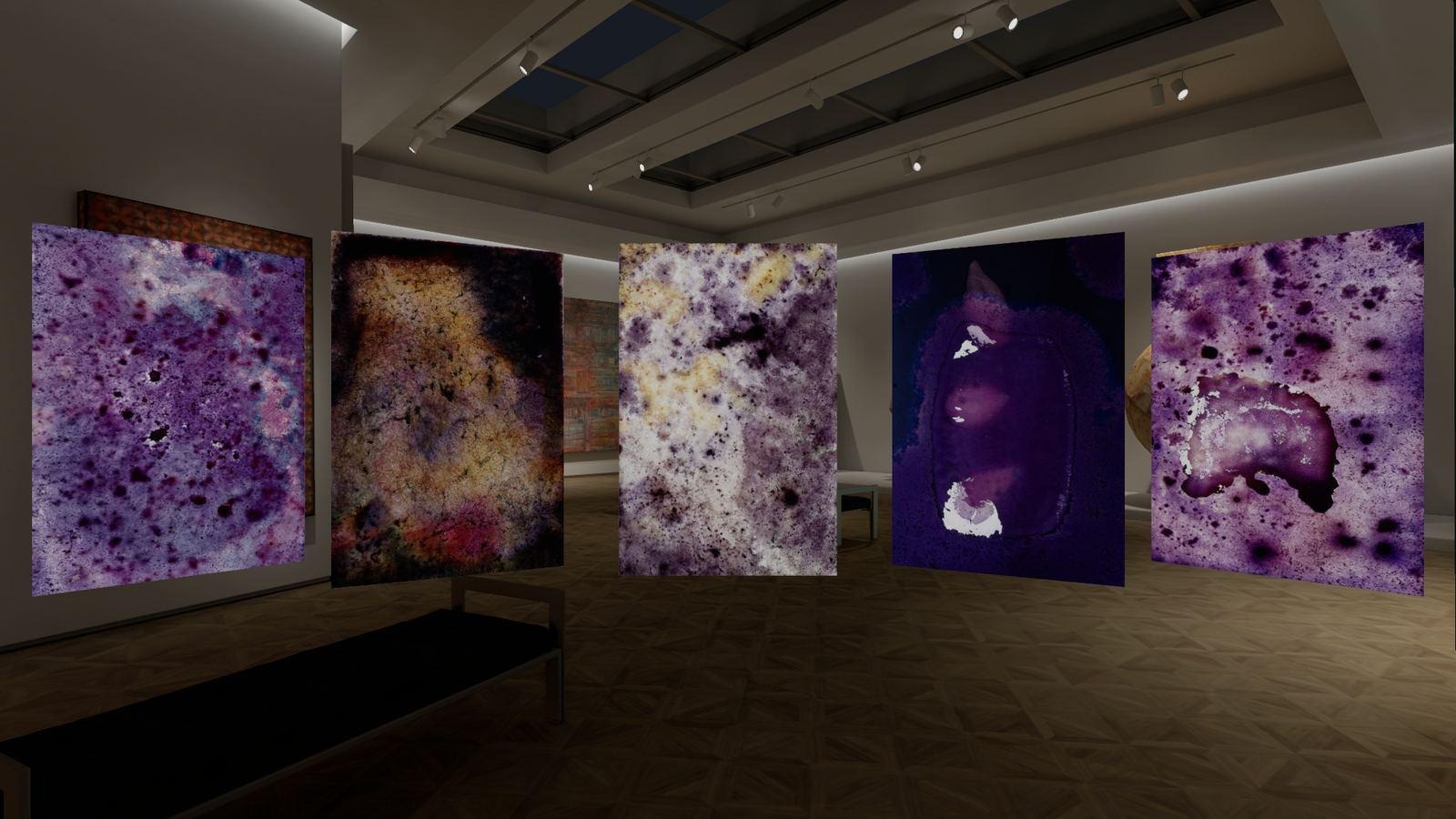
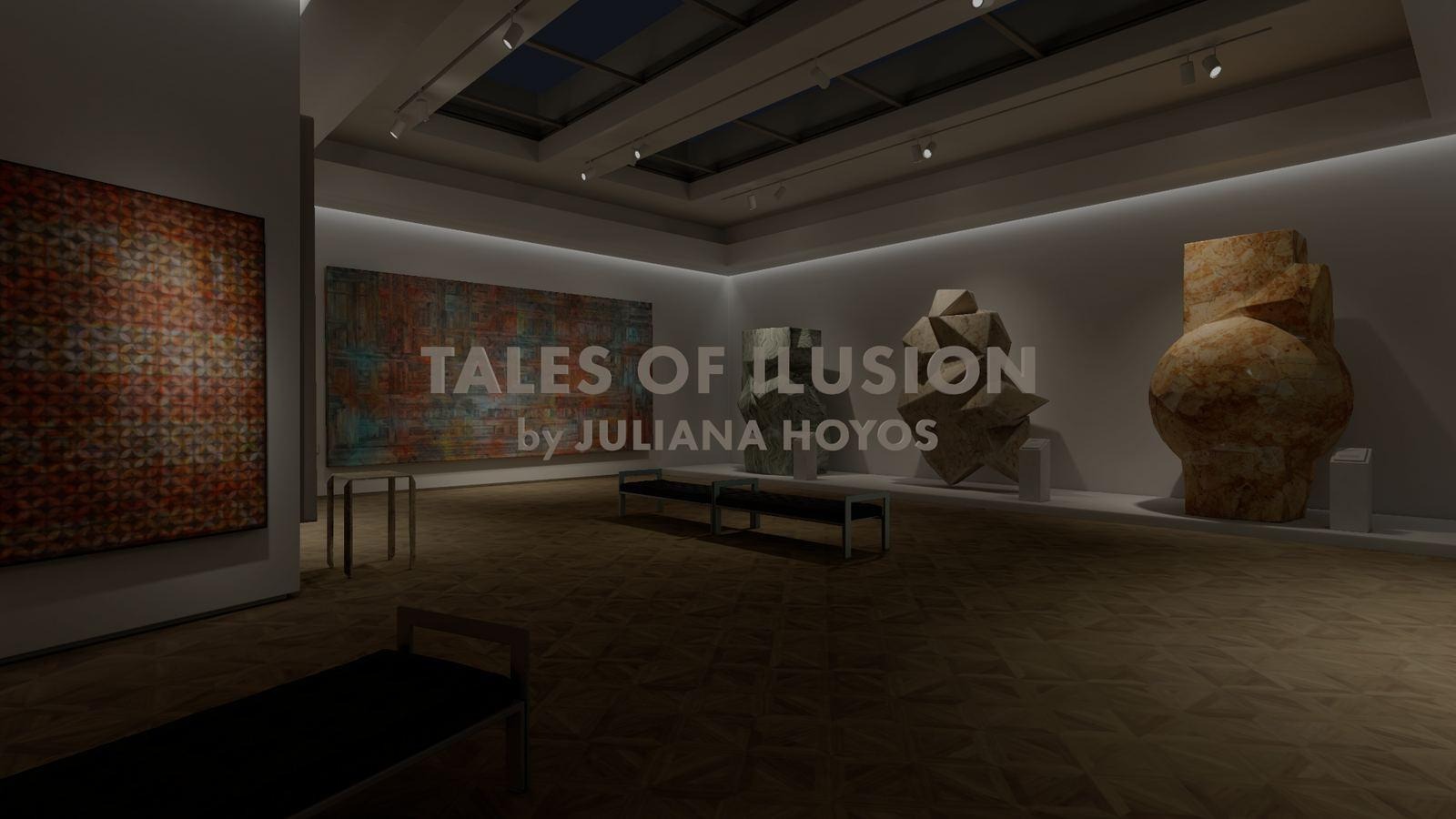
Long before any visionOS code, Tales of Illusion existed as a photographic inquiry into instability, transformation, and the fragile nature of perception. At its center are color negatives whose chemical deterioration altered the scenes they once recorded. Rather than treating those transformations as damage to be corrected, the work embraced them as part of the image itself. Fractured surfaces, chromatic shifts, luminous distortions, and unstable visual structures became the foundation of a series that pushes at the limits of what can be seen and represented.
The images resist certainty. Forms emerge and fade. Light acts as a constructive and a destructive force at the same time. What reads clearly in 1 moment turns ambiguous in the next, and instead of offering answers the photographs ask you to slow down and notice your own seeing.
That foundation set the brief. The goal was never a virtual gallery or a 3D archive of existing pieces. It was to find out whether the perceptual conditions inside the photographs could become environments: how to make the work’s conditions inhabitable rather than how to display it.
When immersive technology comes up, the talk usually turns to hardware, rendering, and interaction models. Those mattered. They weren’t why the headset entered this project.
The themes in Tales of Illusion, perception, embodiment, visibility, attention, and sensory uncertainty, were already in the work. Spatial computing offered a medium that could extend them past observation. Instead of standing in front of an image, a person could move through an environment built on its logic. Light could be atmospheric rather than illustrative. Sound could shape perception instead of accompanying it. Gestures could belong to the experience instead of commanding an interface.
So we approached the headset as a perceptual instrument rather than a display, and that distinction guided every creative and technical decision. The technology was there to serve questions the work was already asking.
When translating artwork into an immersive medium, what should remain unchanged?
The photographic series draws its power from ambiguity. It lives between appearance and disappearance, certainty and uncertainty, presence and absence, and it deliberately refuses complete interpretation. Those qualities had to survive the move into space.
So the environments extend uncertainty rather than clarifying it, and invite you to stay inside ambiguity rather than resolving it. Every visual effect, interaction, environmental behavior, and rendering decision was judged by 1 question: does this deepen the perceptual experience, or does it distract from it?
A constraint that strict sounds limiting. It was the most useful design tool on the project.
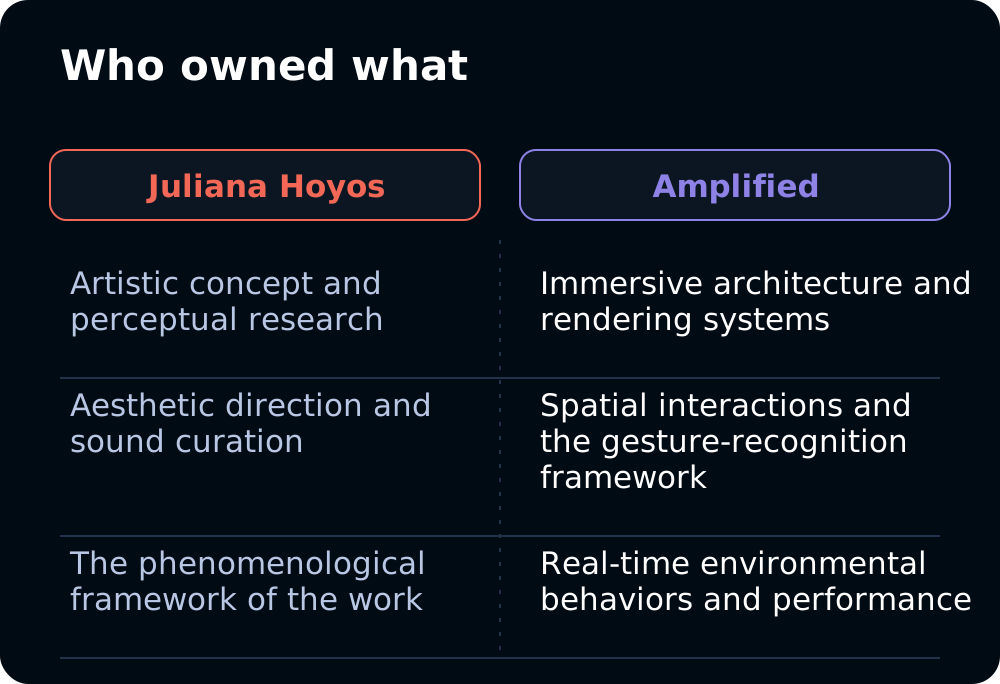
Projects like this get described as art-meets-technology collaborations, and the usual shape is a handoff: the artist develops a concept, then a technical team executes it. That shape failed here almost immediately.
Juliana led the artistic concept, the perceptual research, the aesthetic direction, the sound curation, and the phenomenological framework. Amplified built the immersive architecture, the rendering, the spatial interactions, the gesture-recognition framework, and the real-time environmental behaviors that let those ideas exist in space. And the 2 halves shaped each other from the start. Ideas like perceptual instability, fragility, embodied interaction, and light modulation became system-level decisions. Engineering helped decide how the experience should behave, instead of implementing a list of visual requirements.
What we ended up with was a continuous exchange. A technical possibility would open an artistic direction. An artistic intention would reshape an implementation. The final experience came out of that back-and-forth, and neither side could have reached it alone.
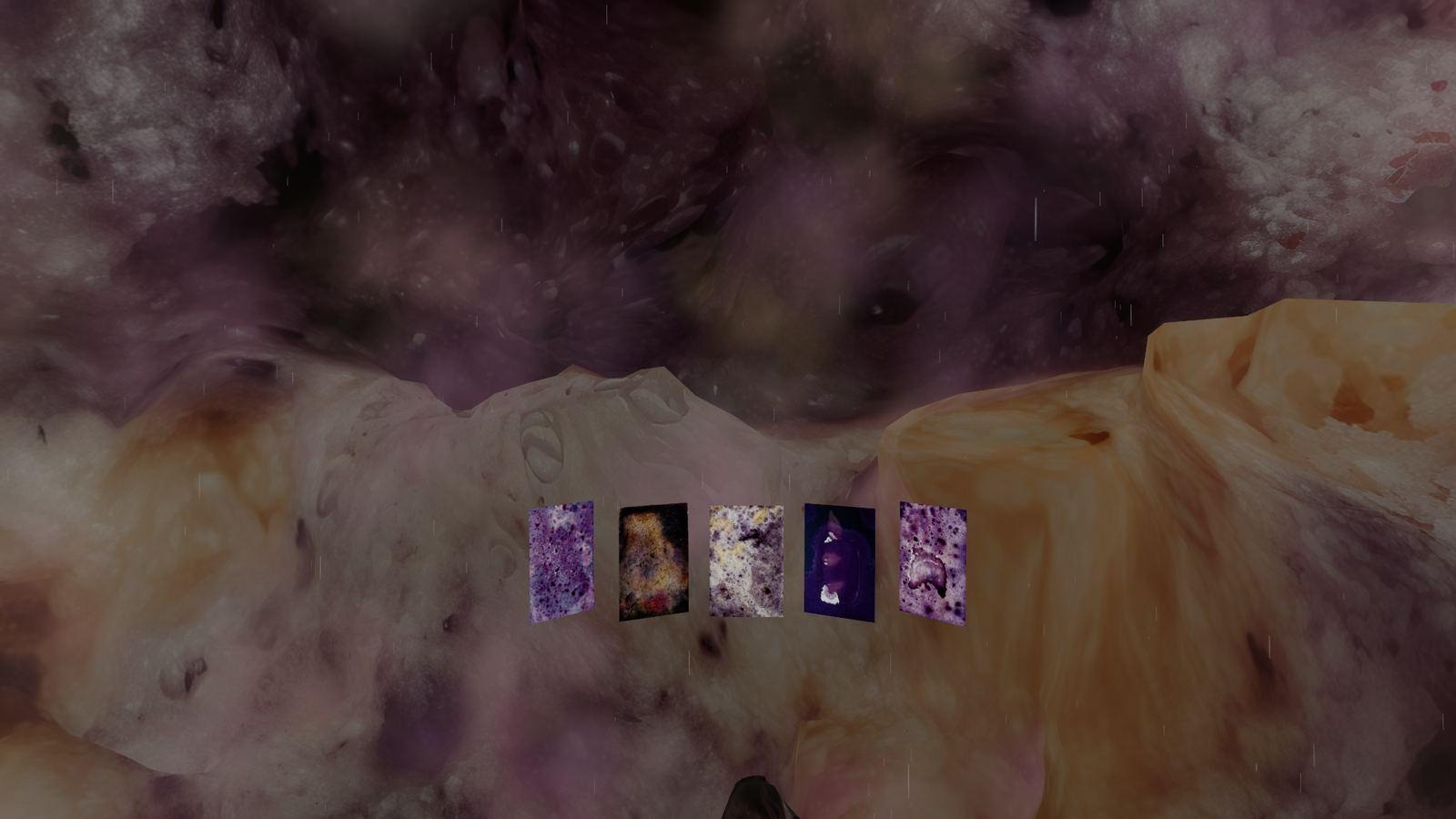
The obvious approach, placing images inside a 3D room, was discarded quickly. A gallery keeps the images as objects. The aim was to translate their internal logic into space. So 5 works from the Illusion series, III, VIII, XIX, XXVI, and XXXIII, became 5 distinct immersive worlds, each with its own visual and atmospheric logic and each connected to the language of the series.
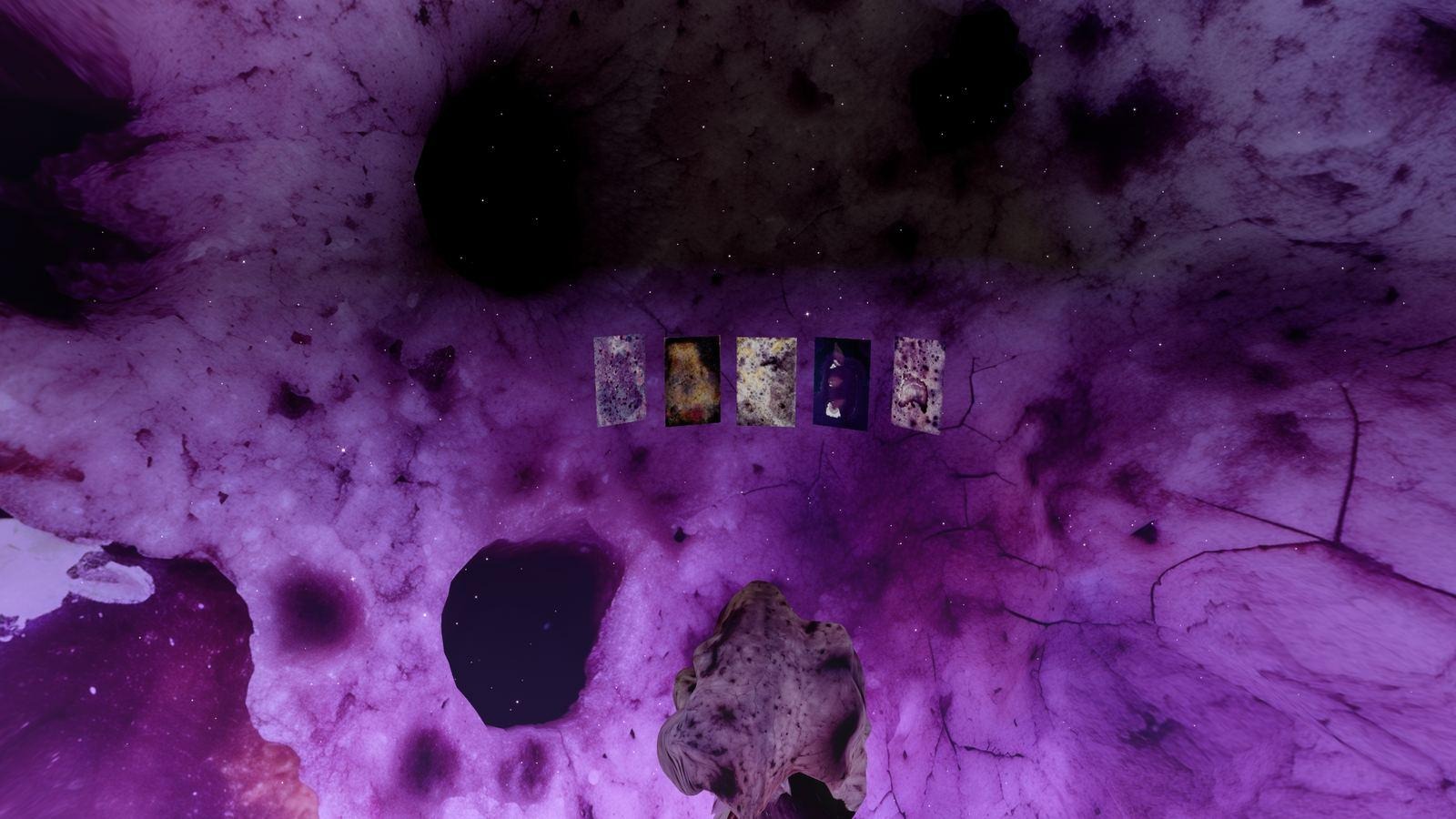
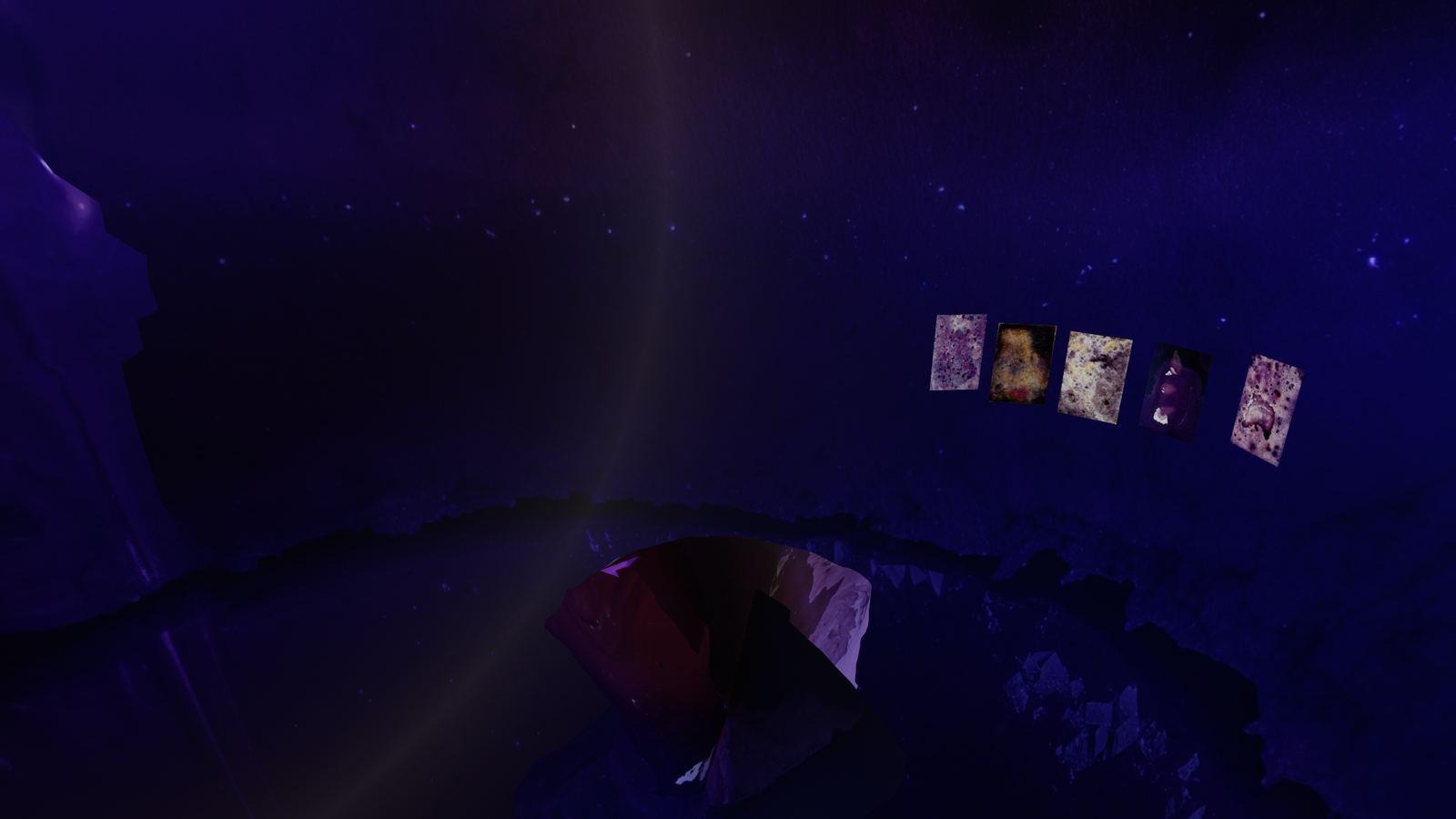
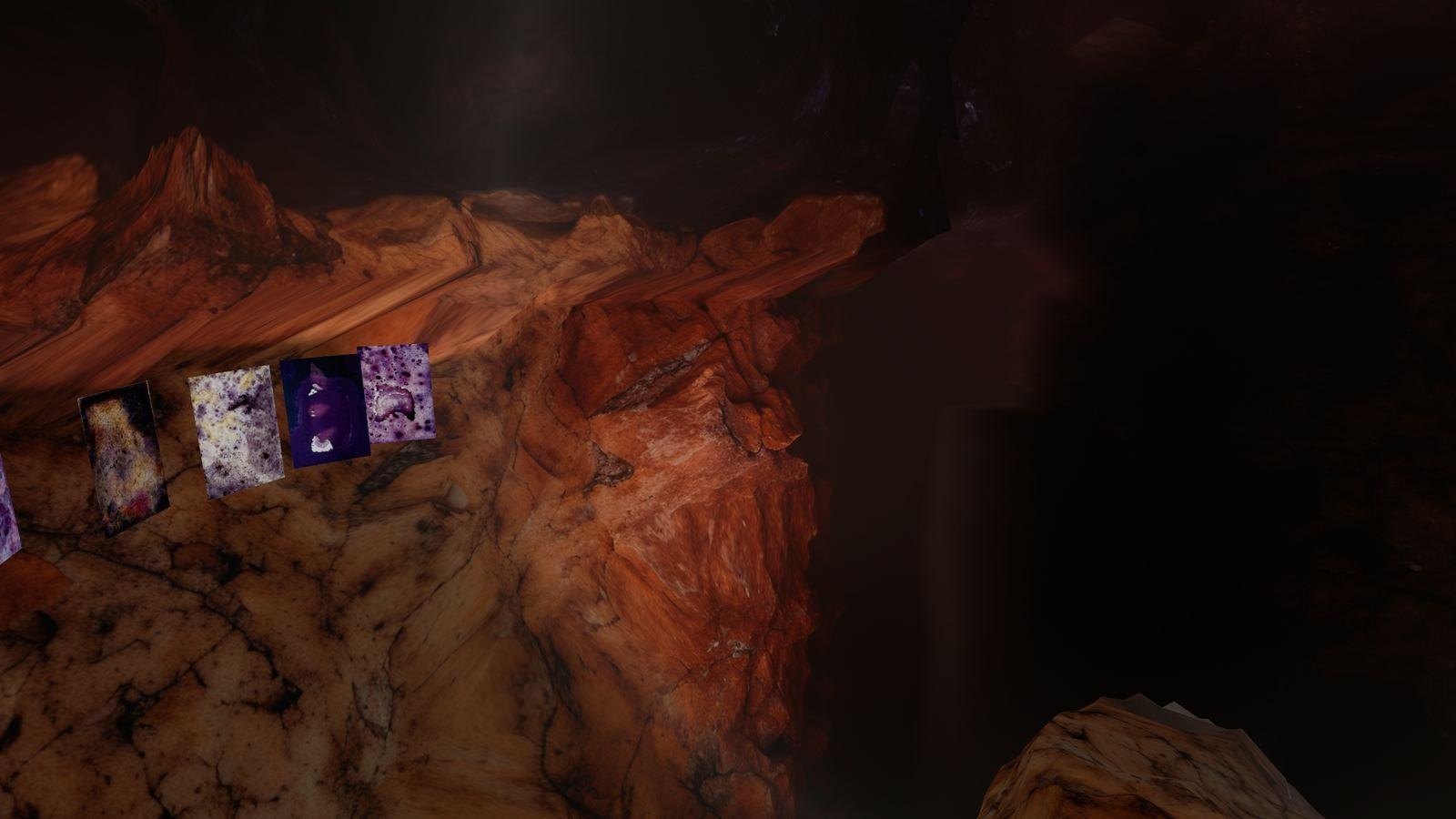
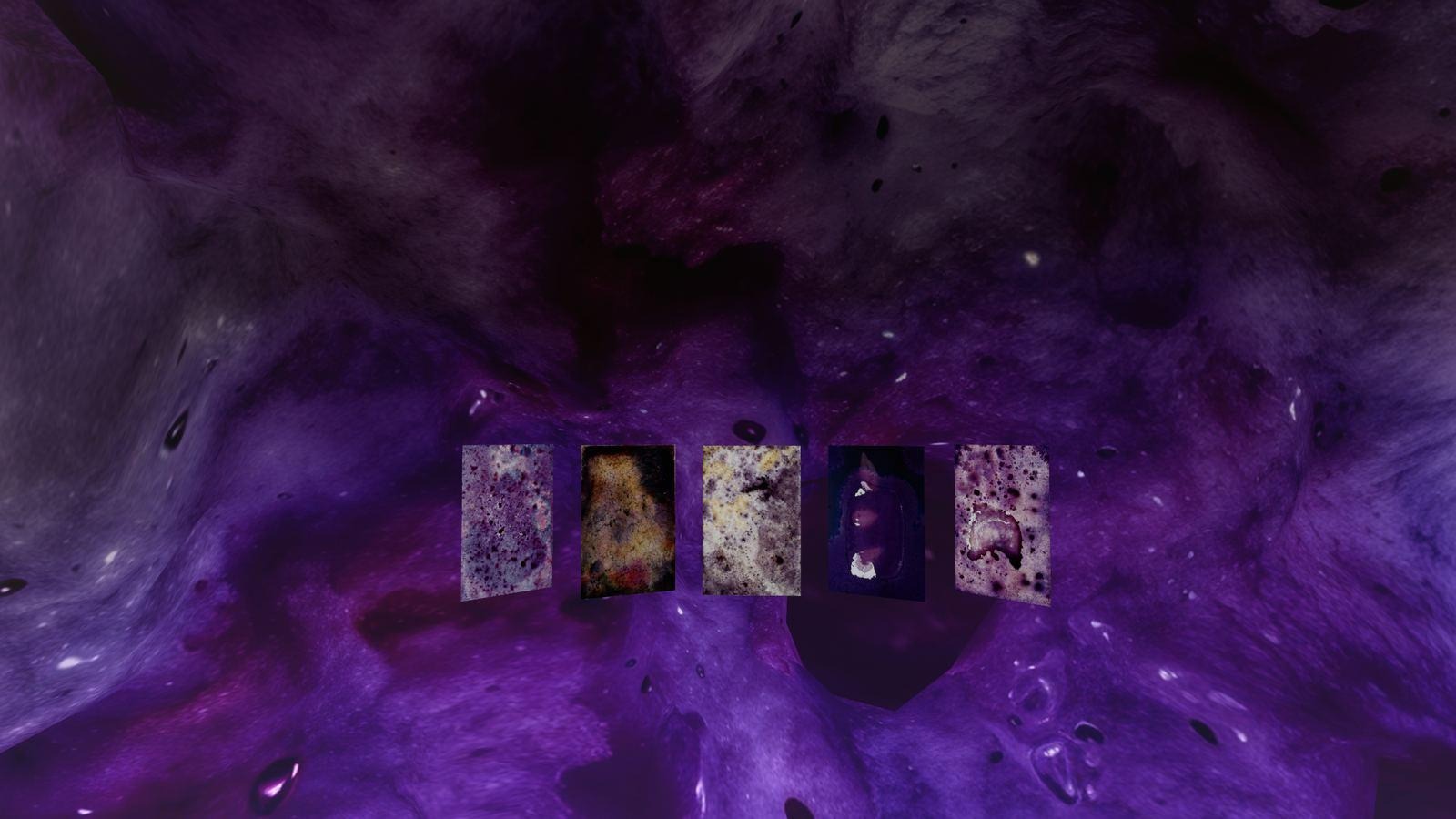
III opens as a bright magenta cavern, the source works hanging as small panels inside it, with dark openings that read as either depth or damage.
VIII is pale and marbled, violet and amber like light through stone, and the panels sit in it as if the photograph had been unfolded around you.
XIX is the darkest of the 5, a deep blue expanse crossed by a thin ring of light that the panels seem to have drifted out of.
XXVI surrounds you with rust and amber, cave walls that fade into black at the edges of vision.
XXXIII holds the panels inside a deep violet cloud that appears lit from within.
The app has 2 layers. The first introduces the project through context, curated video, and interactive previews of the selected works. The second is the immersive experience itself, and once you’re in it the emphasis moves from representation to sensation. Imagery, sound, light, atmosphere, movement, and interaction combine into something closer to inhabiting a perceptual condition than exploring a virtual world. Realism was never the objective. Presence was.
Most immersive apps treat gestures as navigation: select, grab, move, rotate, activate. Interactions exist to control a system. Tales of Illusion treats gesture as part of the perceptual language of the work.
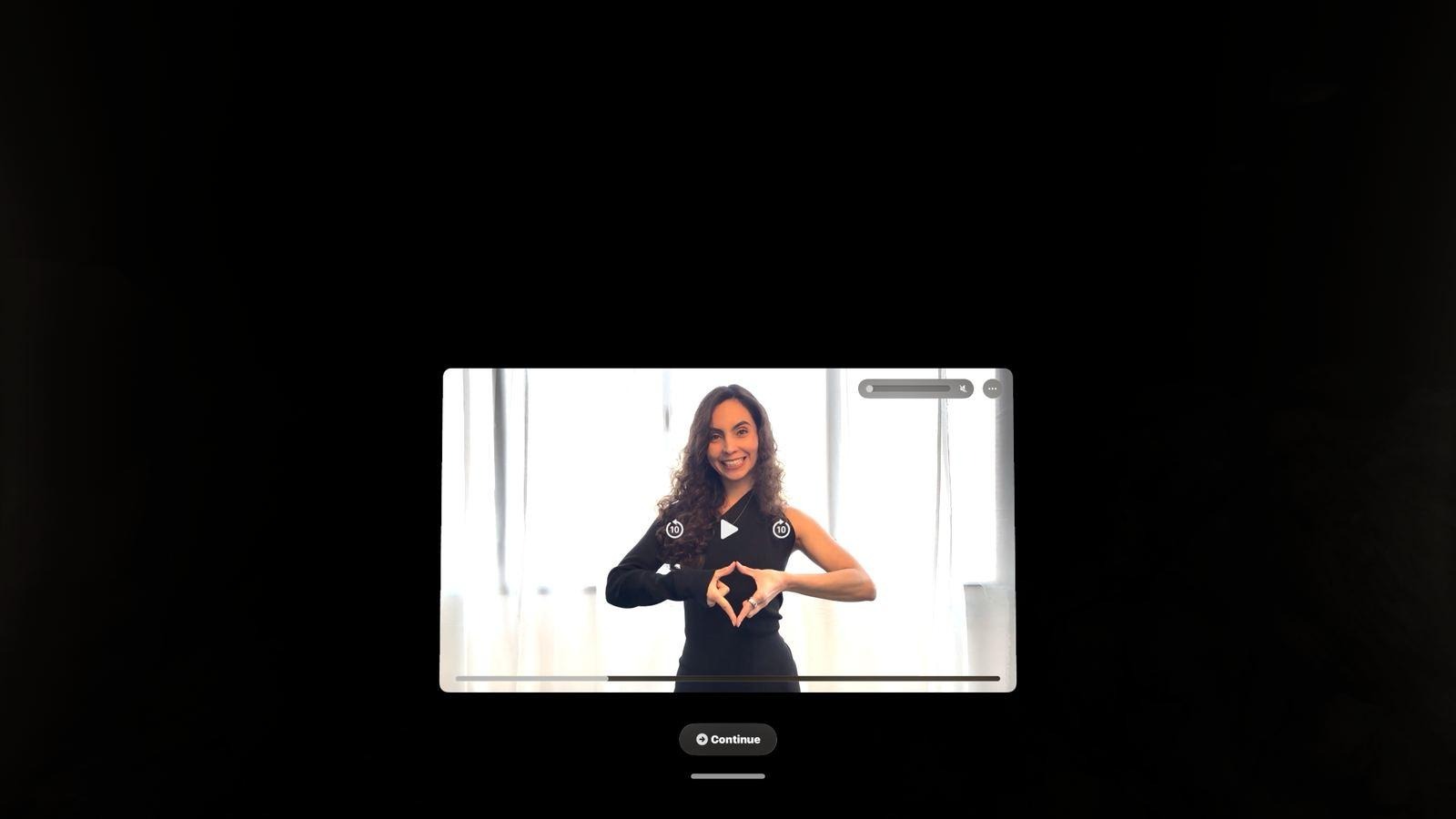
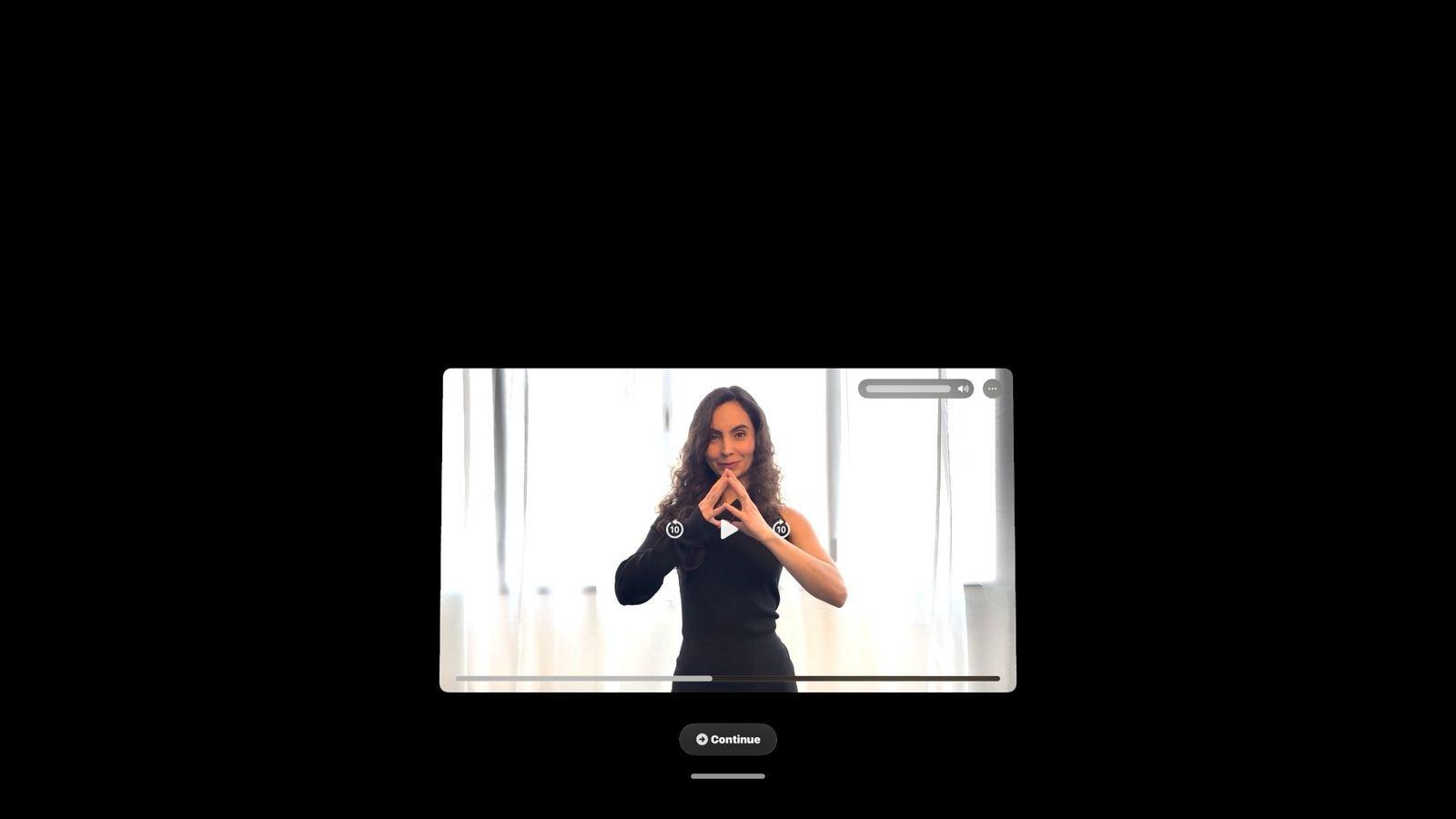
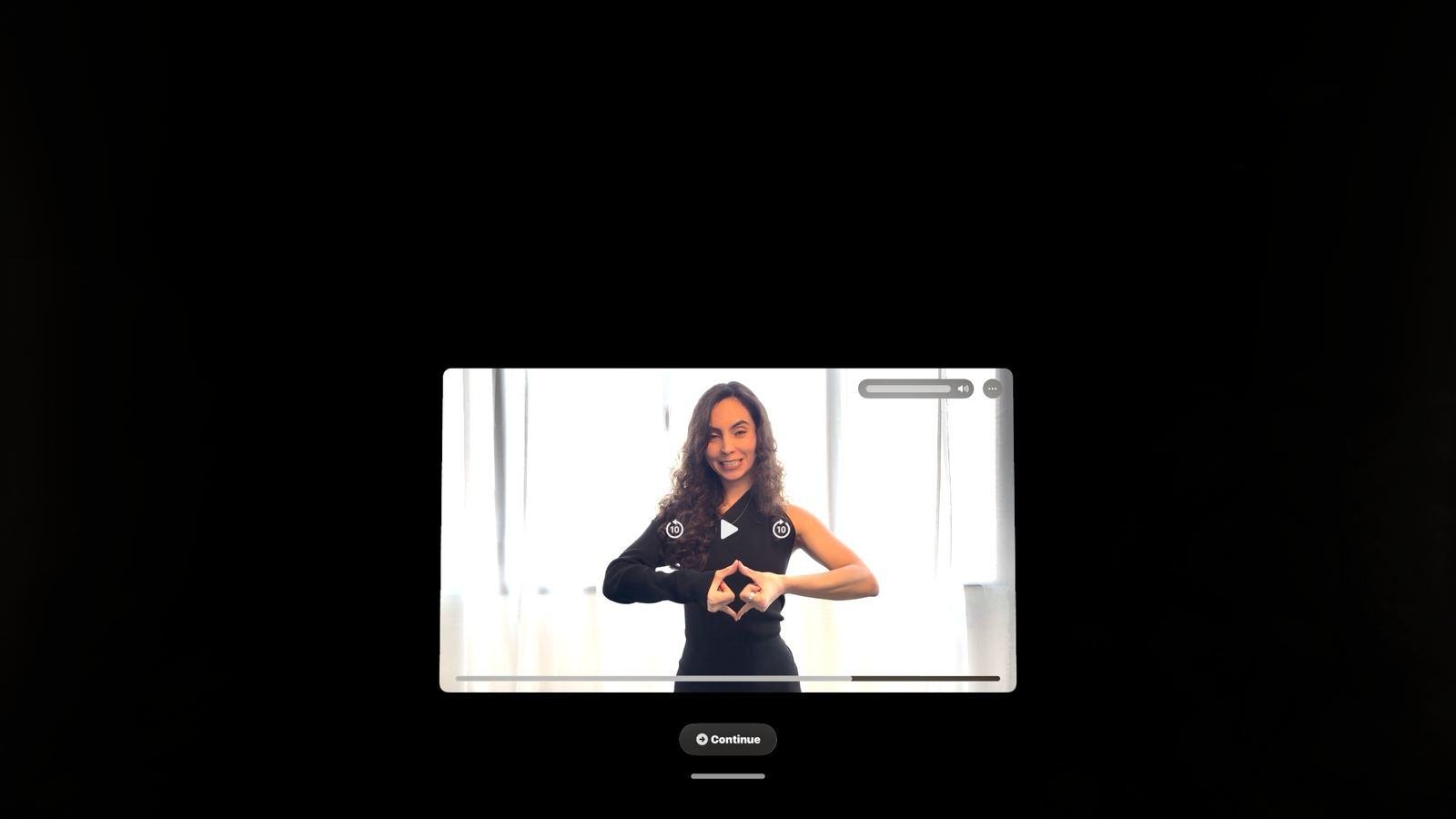
Custom hand tracking reads relationships between fingers, palms, and position in space, and uses them to trigger environmental change. Stretching both hands apart can begin a transition into a deeper state of immersion, and the light responds.
Bringing fingertips together can influence movement and rotation, so the environment turns with you rather than at your command.
Specific hand configurations activate behaviors tied to the visual language of each world, releasing the atmospheric elements that belong to it.
What makes these interesting is that none of them is presented as a command. You’re rarely thinking about controlling an interface. The gesture becomes part of how the environment behaves, an extension of the perceptual experience, and the subtle difference changes the whole relationship between person and system. Participation was the goal, not interaction for its own sake.
A lot of immersive work chases visual complexity: more geometry, more effects, more movement, more simulation. Tales of Illusion needed the opposite. The environments had to feel delicate. Light had to look unstable. Atmospheric elements had to respond without overwhelming, and motion had to support contemplation instead of excitement.
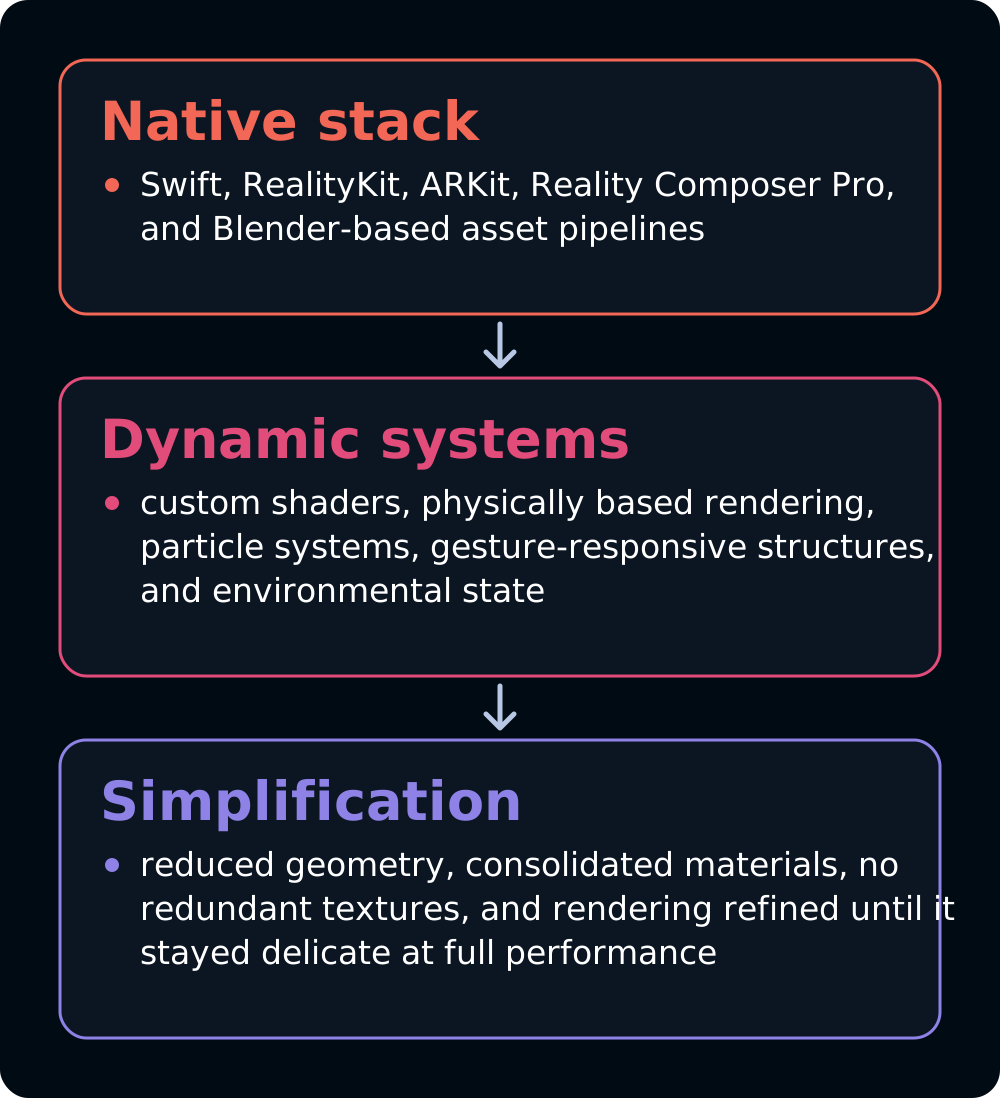
We built it natively for visionOS with Swift, RealityKit, ARKit, Reality Composer Pro, and Blender-based asset pipelines. Custom shaders, physically based rendering, particle systems, gesture-responsive structures, and environmental state systems let each world evolve with the person inside it.
Just as much effort went into taking things away. Geometry was reduced wherever possible, materials consolidated, redundant textures removed, and rendering refined over and over to keep the images intact at full performance. Those decisions belonged to the artistic objective as much as to optimization, because a fragile world can’t feel fragile if the frame rate stutters.
What came out is neither a conventional artwork nor a conventional app. Photography expanded into the atmosphere. Gesture became a perceptual tool. Immersive technology served as a medium for reflection rather than acceleration.
As spatial computing matures, projects like this one point at a different future for artist and technology partnerships. New platforms don’t have to be distribution channels for existing work. They can be places where artistic inquiry takes new forms.
For us, that’s the part that lasts. Not that the technology made the work more spectacular, but that it let people experience its questions from the inside. If you’re an artist, or a team working with one, and you’re wondering whether a piece could become a place, we’d like to talk. Let's build together.